Paintless Dent Repair or Body Shop: How to Decide What Your Car Actually Needs
So your car got hit. Maybe a shopping cart in an HEB lot, hail came through last spring, or somebody opened their door right into your fender. Now you face a decision most people have never had to make. Body shop, or paintless dent repair? Both can fix your car. The right answer depends on what kind of damage you have. Let us walk through this the way we would if you pulled up to the shop.
Here is the short version: when it comes to paintless dent repair vs body shop work, neither is universally better. They are different tools for different jobs.
What Paintless Dent Repair Actually Does
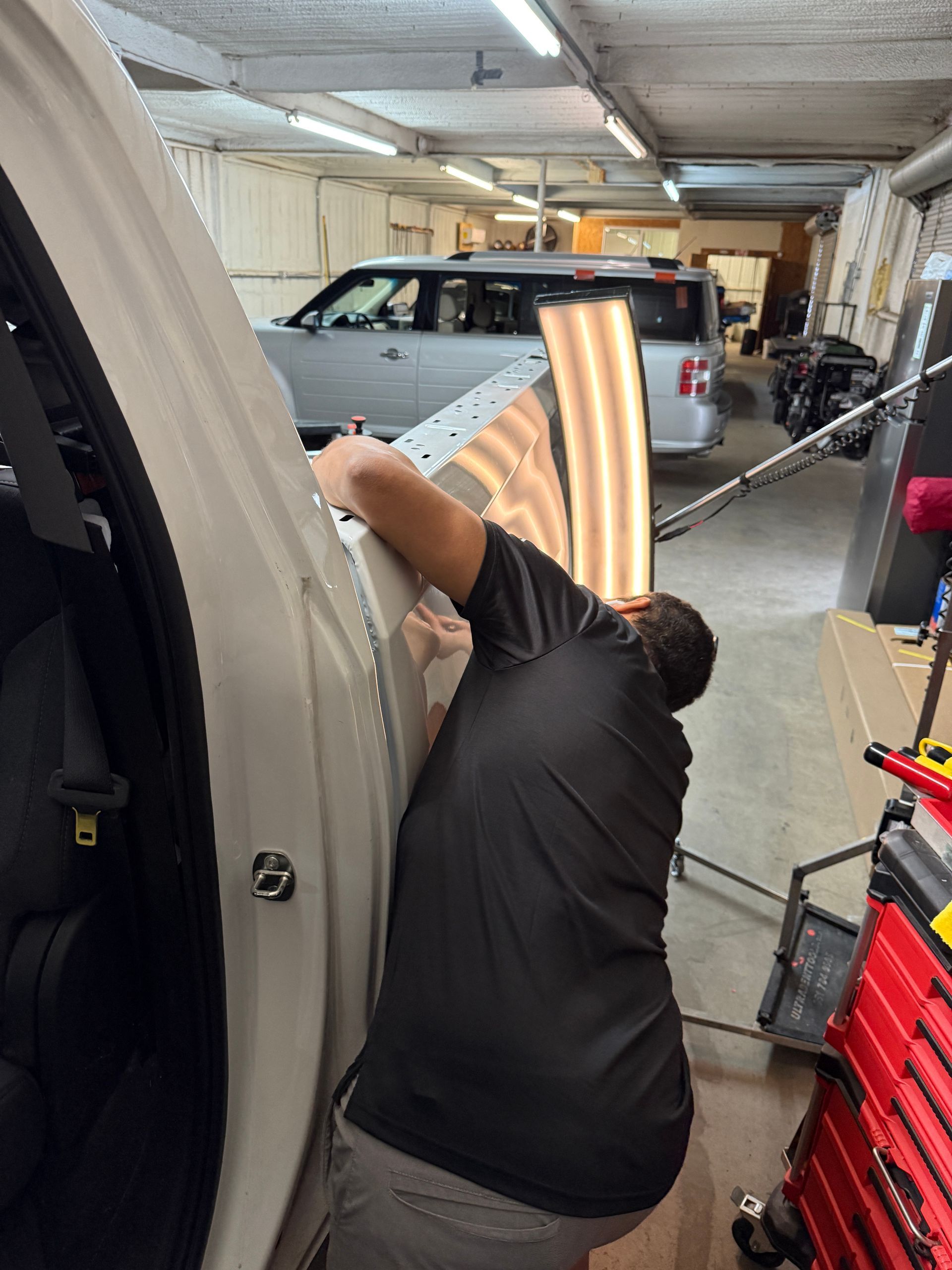
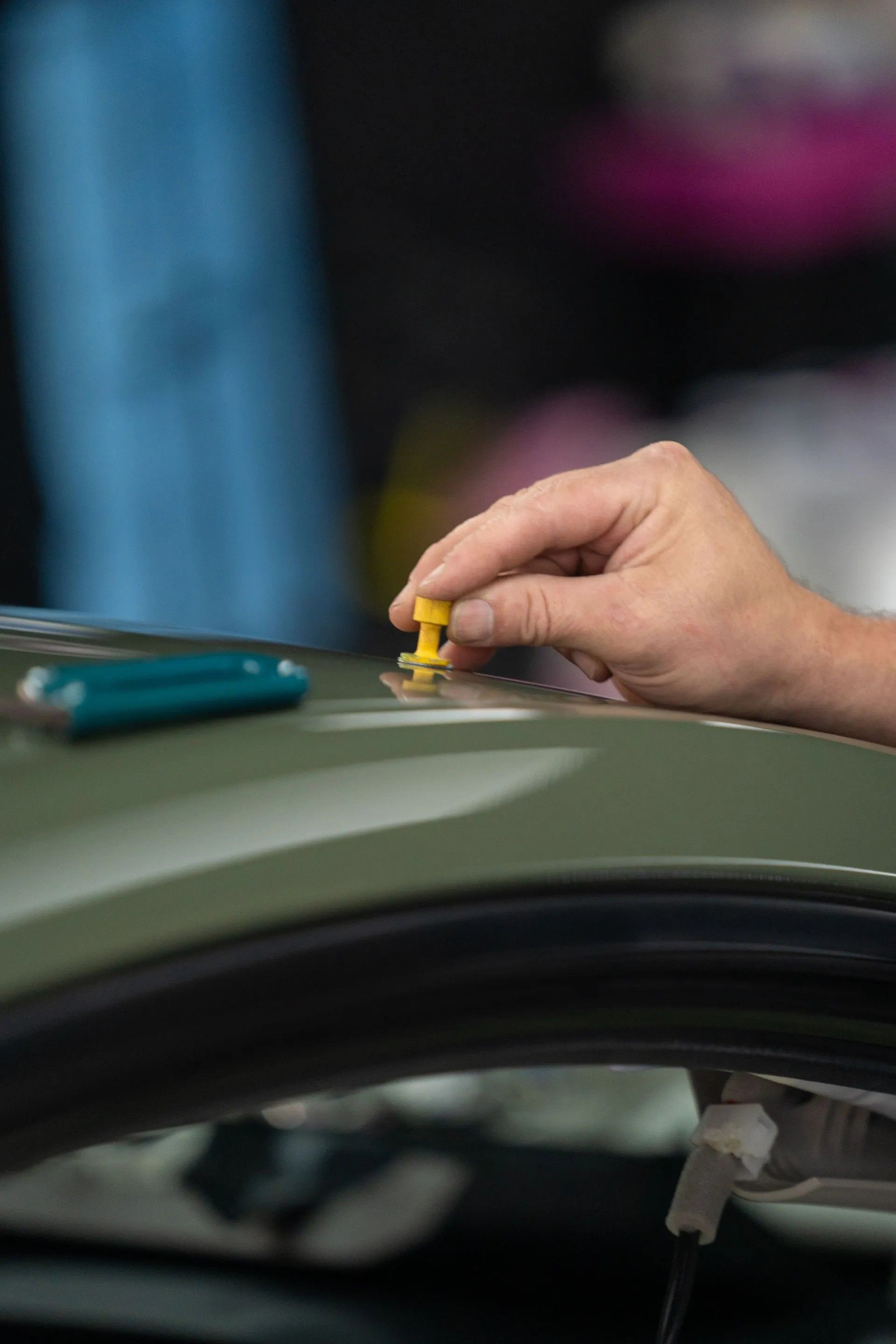
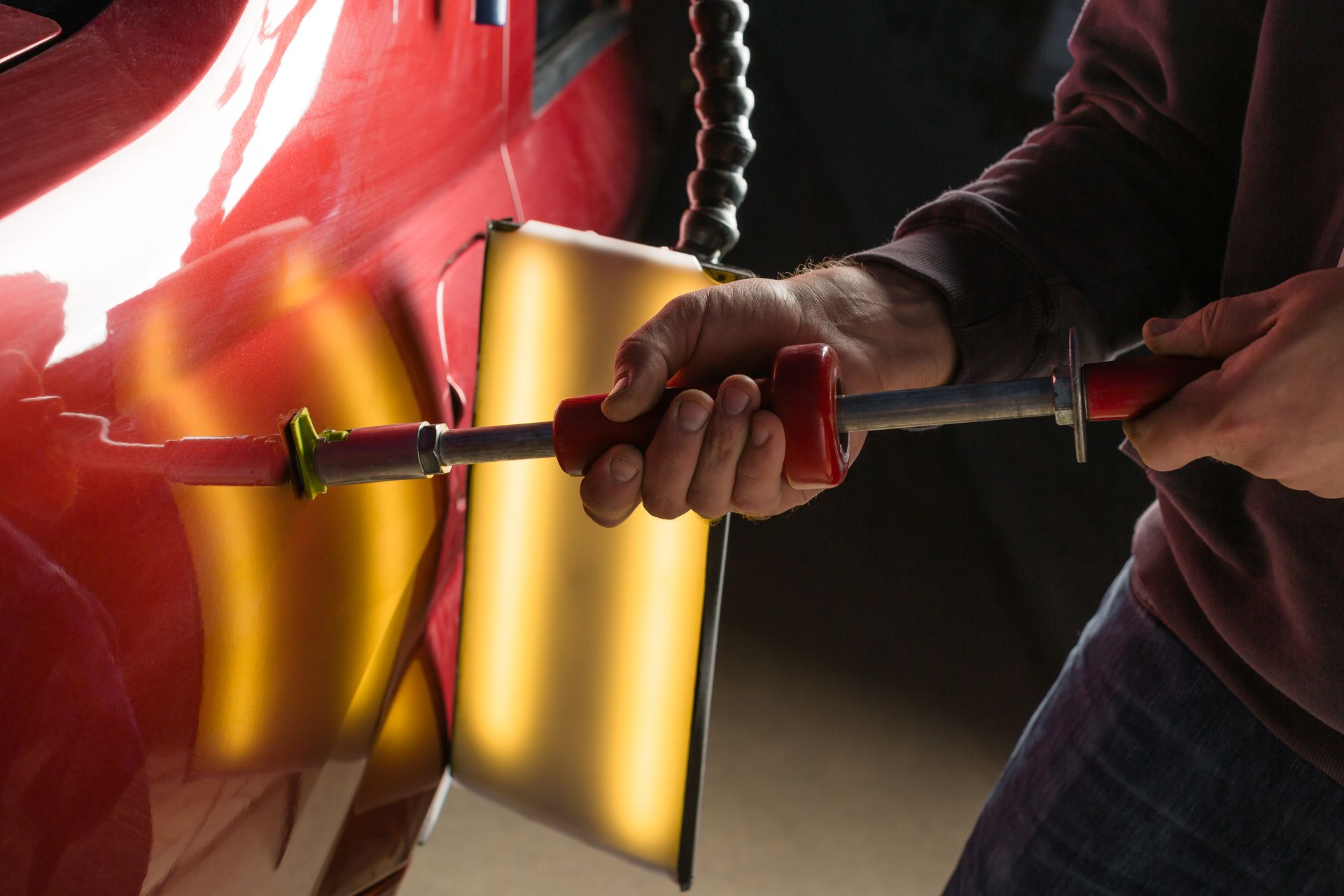
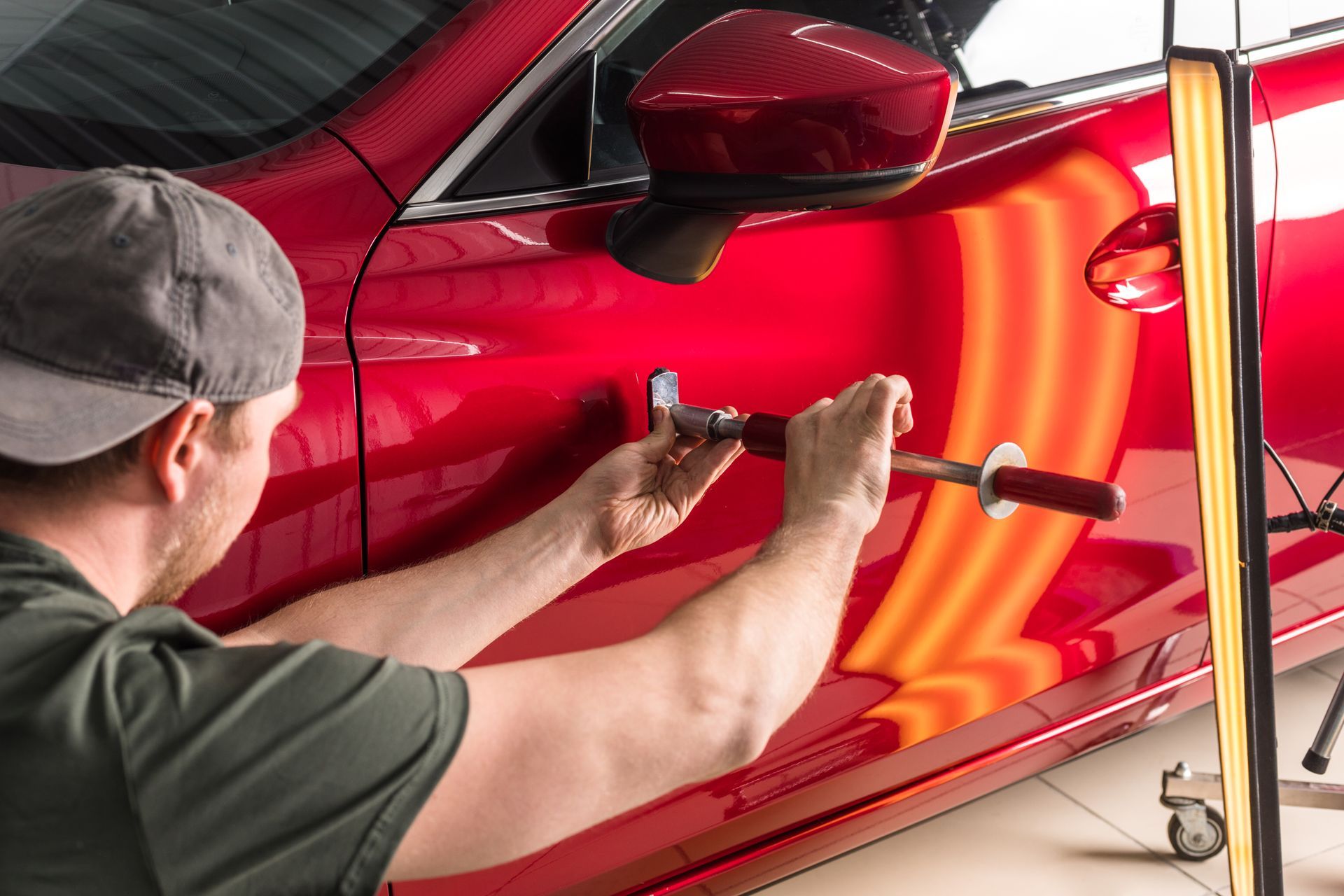
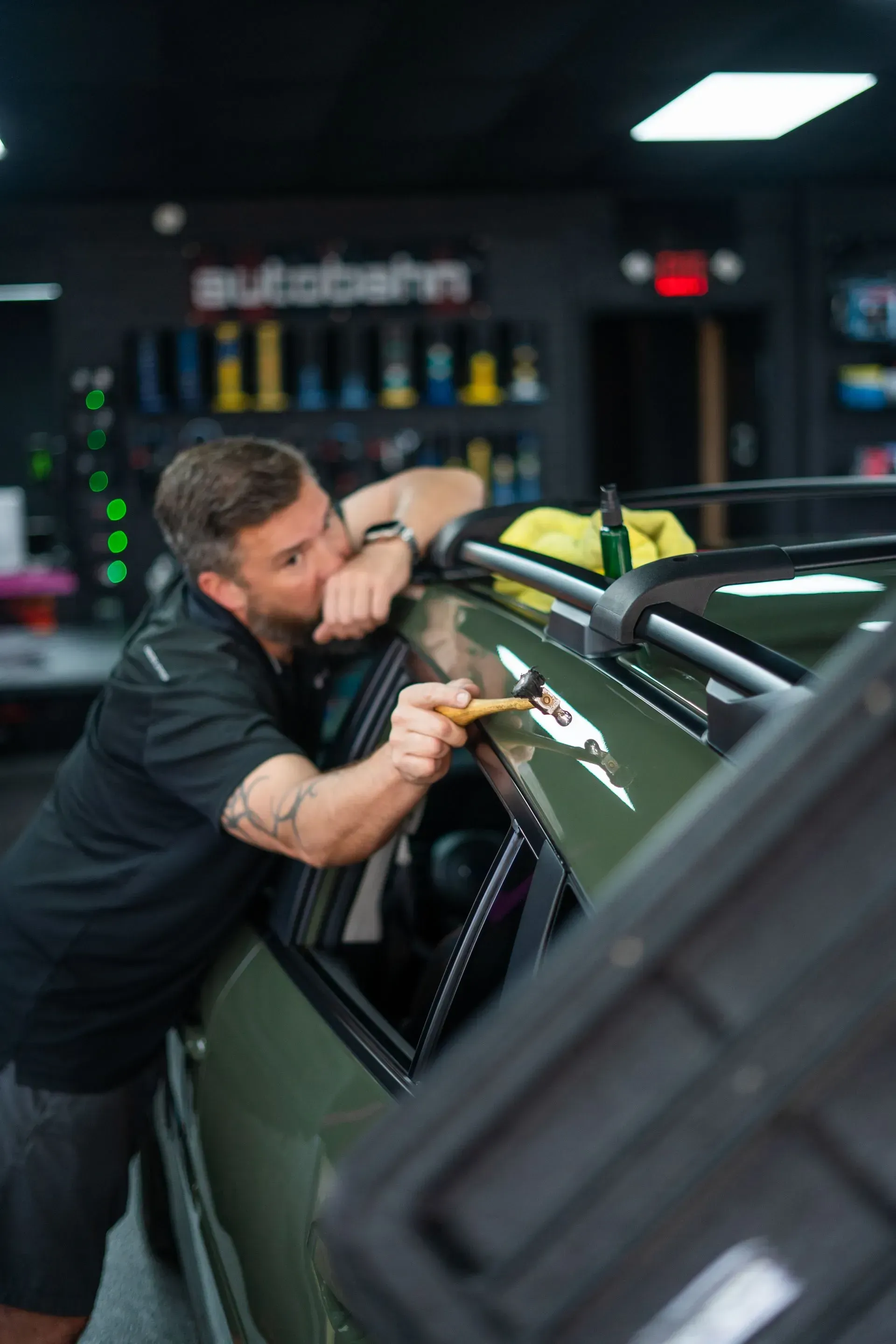
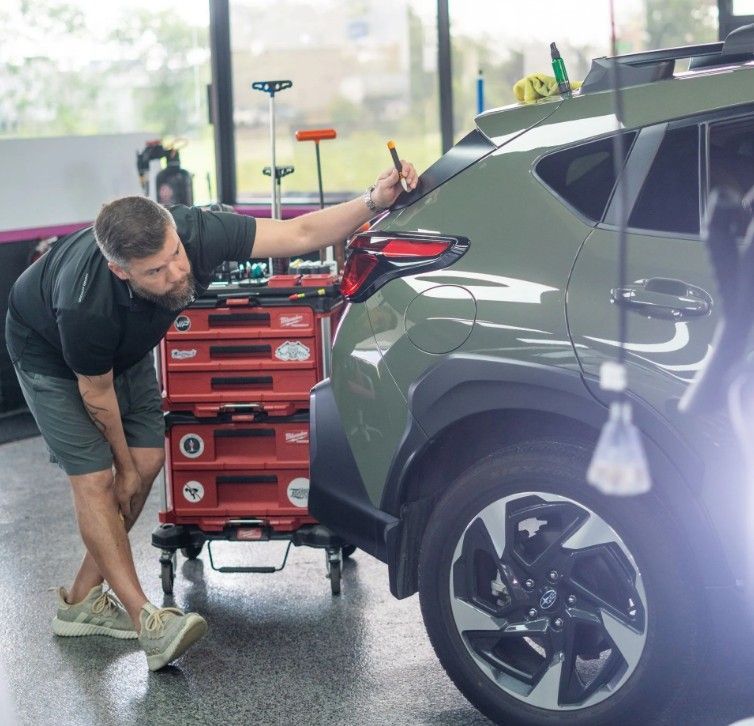
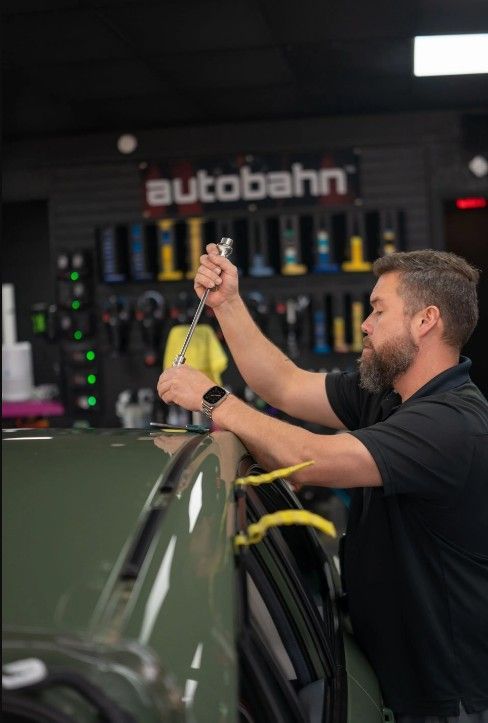
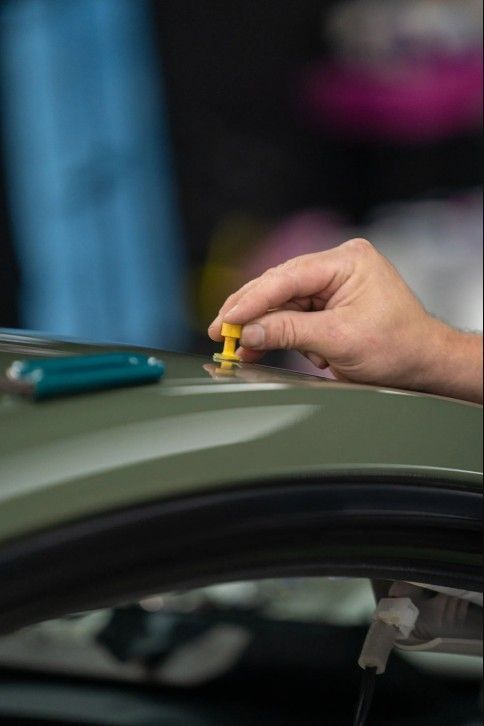
Paintless dent repair, or PDR, is a technique where a trained tech uses specialized tools to massage a dent back into shape from behind the panel. No filler. No sanding. No paint. Your factory finish stays where it was the day the car rolled out of the dealership.
That last part matters. Once a panel gets repainted, it is never quite the same. Even a perfect paint match can shift over time, and a sharp eye can usually tell.
The catch is that PDR only works under specific conditions:
- The paint is not cracked or chipped
- The metal is not fractured or torn
- The dent is not on the very edge of a panel
- The metal still has enough flex to be worked back into shape
Hit any of those limits, and PDR is not the right call.
What a Body Shop Does Differently
A traditional body shop handles the work that PDR will not solve: cracked paint, torn metal, panels that need replacement, and damage where the structure is compromised. They sand, fill, prime, paint, and blend until the panel matches.
Body shops are essential for collision damage, deep gouges, and any scenario where parts come off the car. We are not in the business of badmouthing body shops. The good ones do quality work, and we partner with quality body shops in this area when a job needs both.
When PDR Is the Right Call
PDR shines on certain types of damage. If your dent looks like any of these, paintless is probably the smart move:
- Door dings from the parking lot when the paint is intact
- Hail damage that left dimples but did not crack the clear coat
- Minor dents on doors, fenders, hoods, or quarter panels
- The shopping cart hit the panel without scuffing it through
- Crease dents from a knee or similar light impact
For these, PDR usually saves money compared to a body shop, takes less time, and keeps your paint and resale value intact.
When PDR Is the Wrong Call
This is where most articles stop short. We are going to keep going. PDR is not the answer for every dent:
- Cracked or chipped paint at the dent site. Once paint is broken, PDR will not put it back. You need a body shop to refinish the panel.
- Torn or fractured metal. If the panel has split, no amount of pulling will return it to factory shape.
- Dents on the very edge of a panel. Edge metal is reinforced and does not flex the same way.
- Severe collision damage. Anything that bent the structure or damaged multiple panels needs full bodywork.
- Heavy hail with cracked clear coat. If the strikes broke through the finish, that panel needs paint regardless.
When a job like that comes in, we tell the customer straight. We may still help with what PDR can fix and coordinate with a body shop on the rest.
What This Means for Cost, Time, and Your Paint
The choice between PDR and a body shop has real consequences across three areas:
Cost: PDR is generally less expensive than traditional bodywork because there is no paint, no filler, no booth time, and no blending. The savings can add up on multiple small dents.
Time: PDR moves much faster than a body shop repaint. A few small dents can often be handled in a single visit. A repaint requires drying, curing, and blending time.
Paint and resale: Your factory paint is one of the things future buyers look at. PDR keeps it untouched. A repaint, even a great one, is still a repaint and can affect resale value. To protect that paint going forward, a ceramic coating is worth a look.
A Word on Hail Damage
Hail in Central Texas is its own category. A bad storm can leave dozens or hundreds of dents on one car. We handle hail repair as part of our PDR work and walk you through the insurance process. If most of your dents have not cracked the paint, PDR is usually the right tool, with body shop coordination for any panels that need replacement. The Killeen paintless dent repair page has more on what to expect.
Bring Your Car In and We Will Tell You Straight
The honest answer to the PDR or body shop question is one we will not give over a search bar. Every dent is different. The best move is to come; let us look. We will tell you what your damage needs are, whether that is a job we can do, body shop coordination, or both.
Reach us through the contact page, or learn more about Harker Heights Ceramic Coatings.
Frequently Asked Questions
Will paintless dent repair work on hail damage?
In most cases, yes. PDR is built for the small, evenly distributed dents hail leaves behind, as long as the clear coat has not cracked. We can usually handle most of a hail-damaged car with PDR and coordinate with a body shop on panels needing replacement.
How do I know if my paint is cracked or just dented?
Run a finger lightly across the dent. If the surface is smooth and the paint feels intact, PDR is likely an option. If you feel a chip, a crack, or rough edges, the paint is broken, and the panel needs traditional bodywork. When in doubt, bring it in.
Does paintless dent repair affect my car's resale value?
Because PDR does not alter the paint or panel structure, it leaves your car in factory condition where the dent used to be. For resale, that is an advantage compared to a repaint, since future buyers can tell when a panel has been refinished.
Can you handle insurance claims for me?
For hail damage and similar covered losses, yes. We work with insurance companies on supplements and coordinate with our partnered body shops when conventional work is part of the repair.