Hail Damage Repair Cost in Central Texas: What to Expect and What Affects It
You got hit by a hailstorm. Or maybe your car sat outside while one of those Central Texas afternoon storms rolled through, and now you have a car full of dents and no idea what the repair is going to cost. Fair place to be. The hail damage repair cost question is the one every driver asks first, and honestly, it is the hardest one to answer without seeing the car.
We write hail estimates all the time during the busy season. What we can tell you is what actually drives the number.
Not a national average that has nothing to do with the kind of hail we get here. Not a lowball figure to get you in the door. The real math, from the shop side. This article walks through what changes the total, how insurance shifts things, and what to plan for when you sit down with any shop for an estimate.
Why National Averages Do Not Help You
Read three articles on this topic, and you will see three different dollar figures. That is because hail damage is not a one-size-fits-all repair.
Every car is different. Every storm is different. Every shop prices their work based on their local reality.
Central Texas hail tends to be its own thing. When our storms hit, they hit hard, and they hit lots of vehicles at once. That drives shop backlog, which drives scheduling, which affects how estimates get written. A quote from a shop in a low-hail region has no bearing on what your car actually needs here.
So if you have been searching around for a number, take those national ranges with a grain of salt. The estimate you need is the one written on your specific car.
What Actually Drives the Cost
Here is what actually goes into a hail estimate. Every one of these factors moves the number up or down.
Number of Dents
This is the biggest single factor. A car with twenty dents costs less to repair than the same car with two hundred. Techs count and grade every dent, and each one is priced based on size and location.
For serious hail events, the count matters more than any other variable. A full-vehicle hit is orders of magnitude more work than a partial hit.
Panels Affected
Where the dents land matters as much as how many there are. Some panels are simpler to work on because access is straightforward. Others take more time because of what sits behind the metal.
- Hoods and roofs are typically the easiest to work on
- Trunk lids and fenders are somewhere in the middle
- Doors, quarter panels, and body sides take longer because of trim, wiring, and internal frames
A car with all the damage concentrated on the hood costs less to repair than one with the same number of dents spread across three complex panels.
Dent Size and Depth
Small, shallow dents release faster than deep ones. A dent that pushed hard enough to stretch the metal takes multiple passes to work back to shape. Larger dents also cost more because they take up more of the tech's time.
Techs grade dents by size categories. Every category has different pricing built into the estimate.
Repair Method
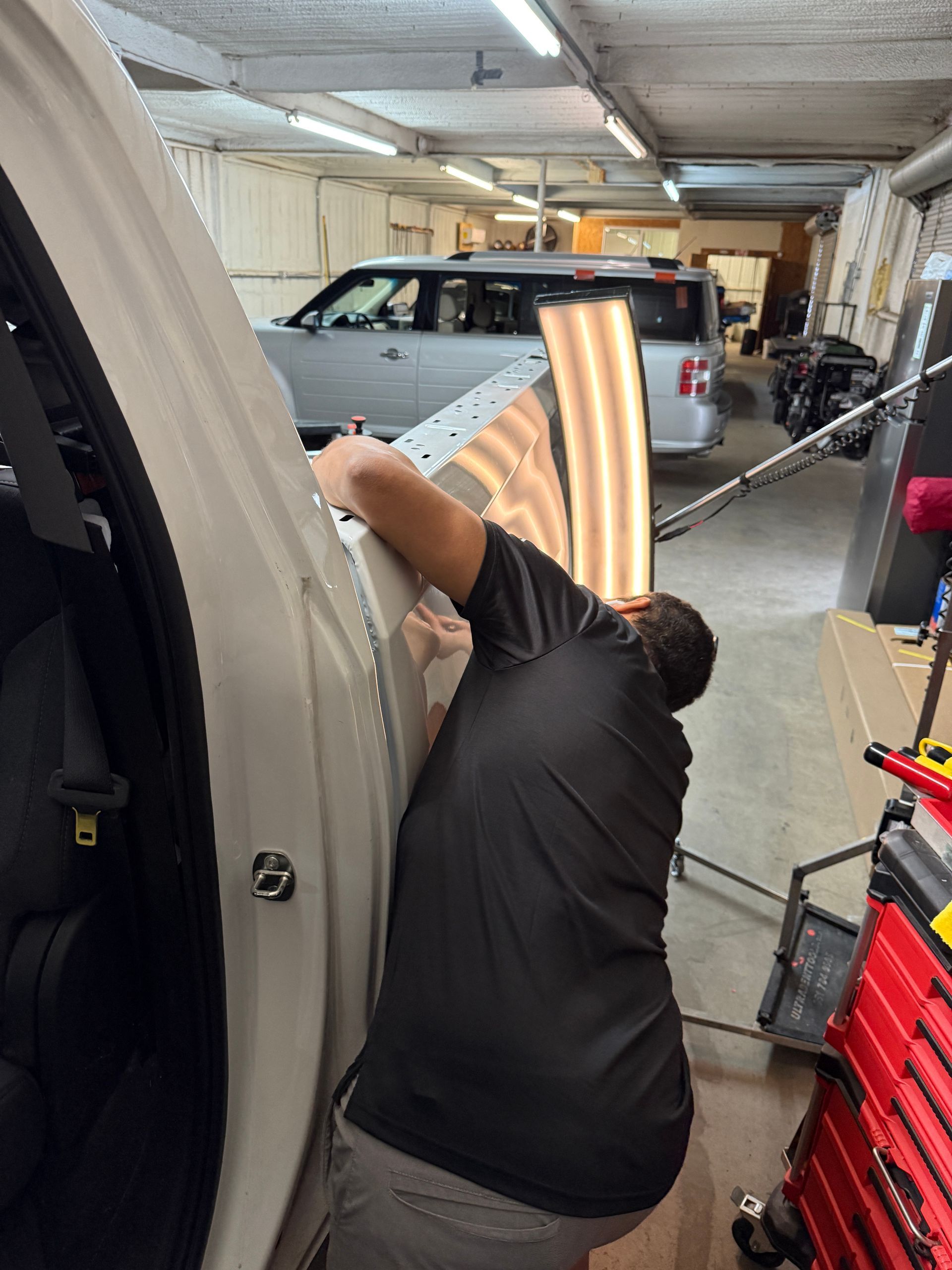
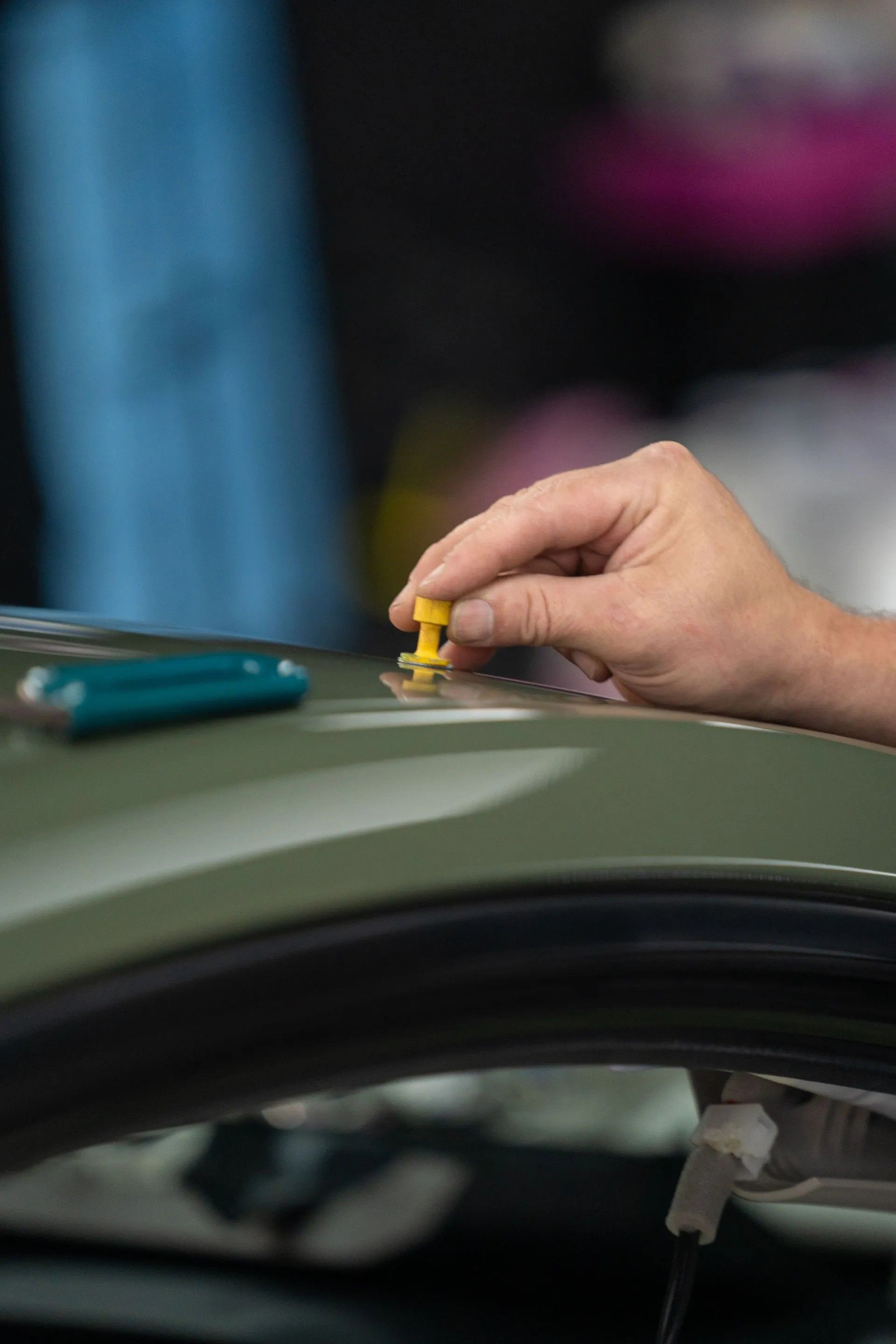
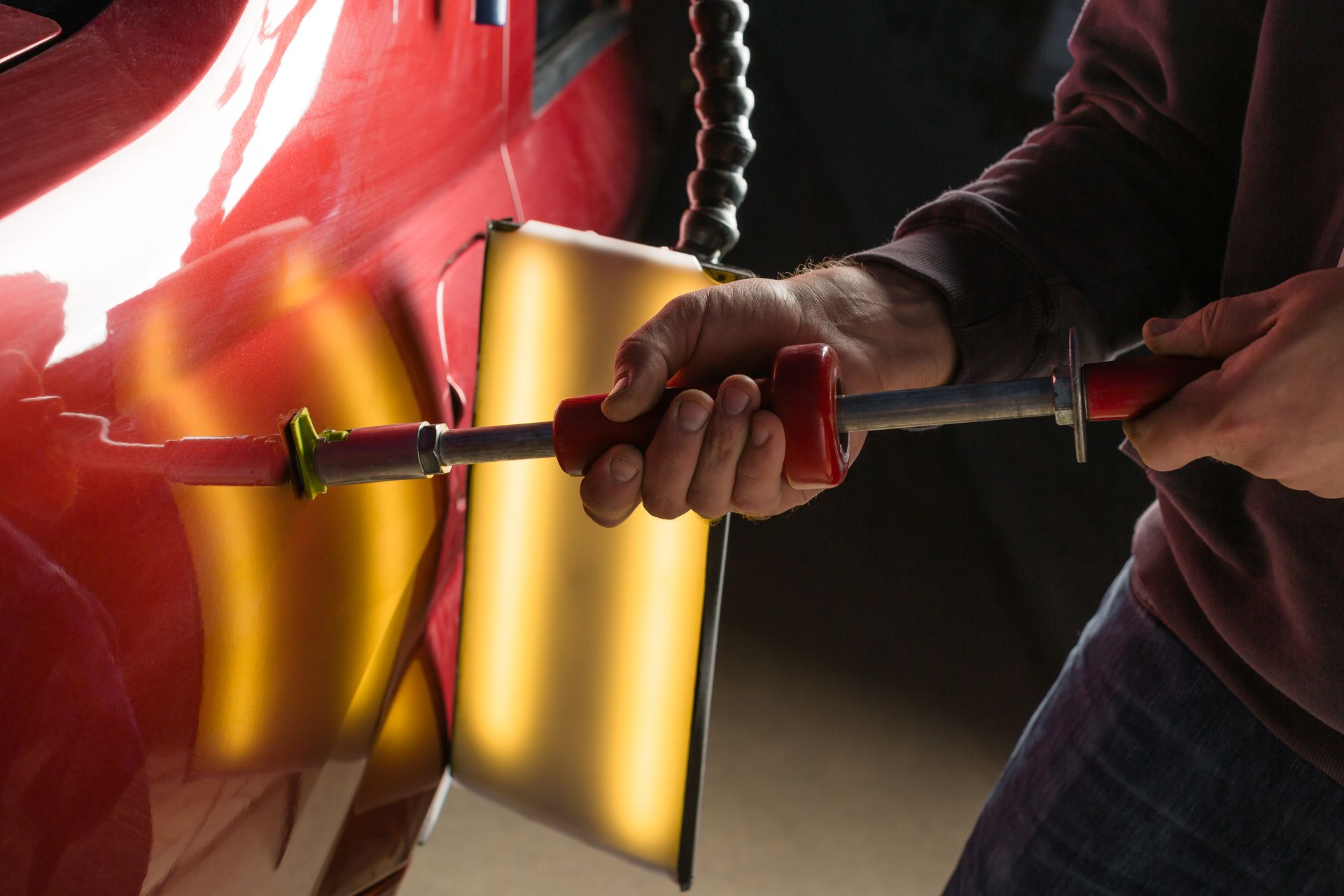
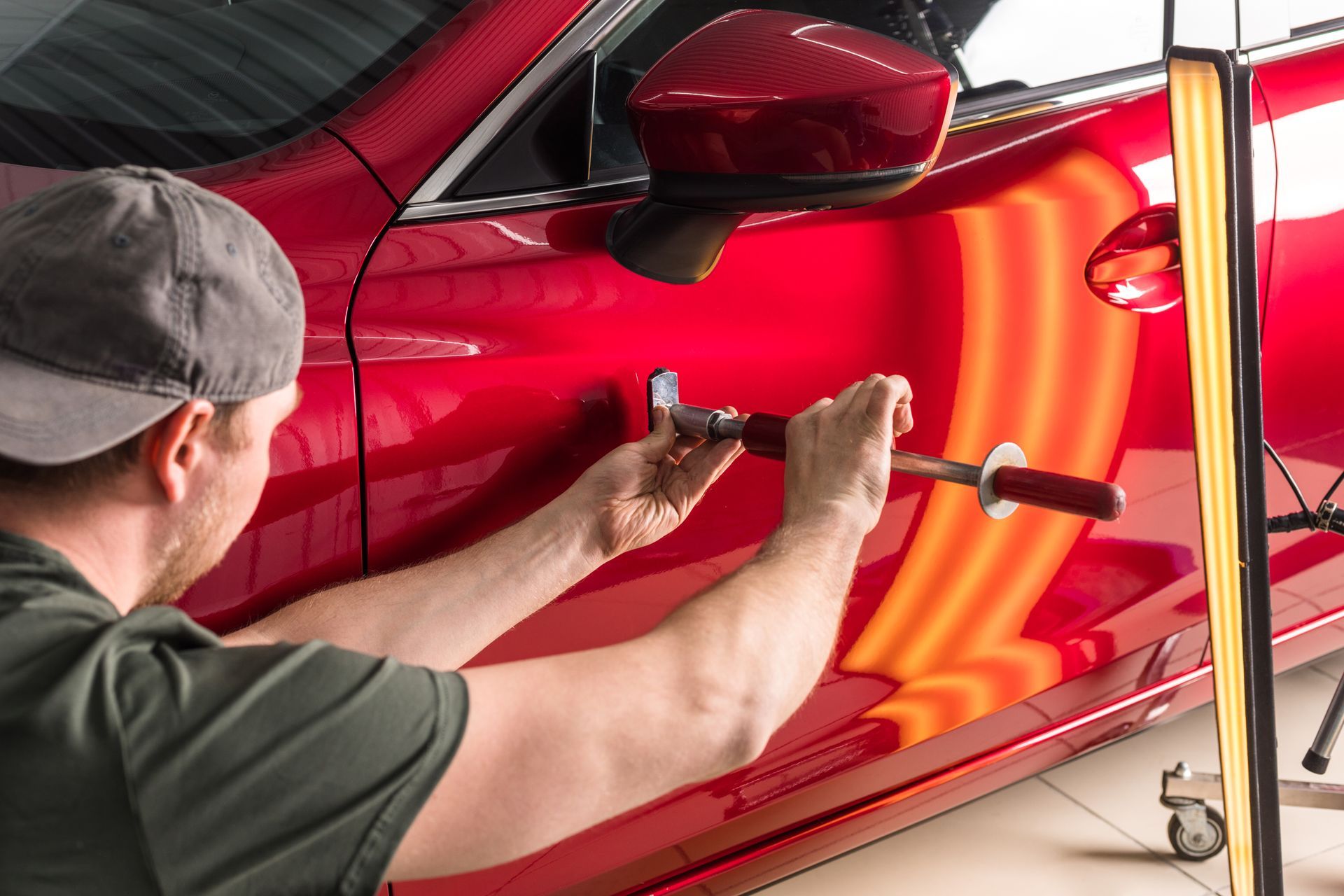
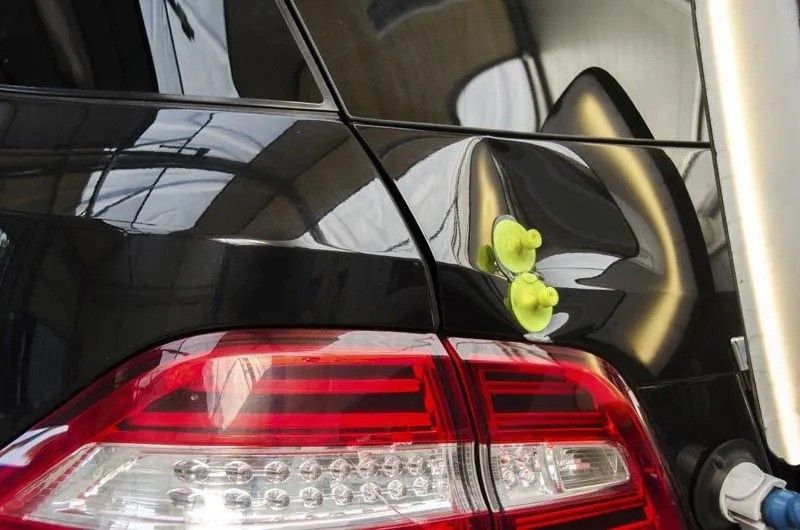
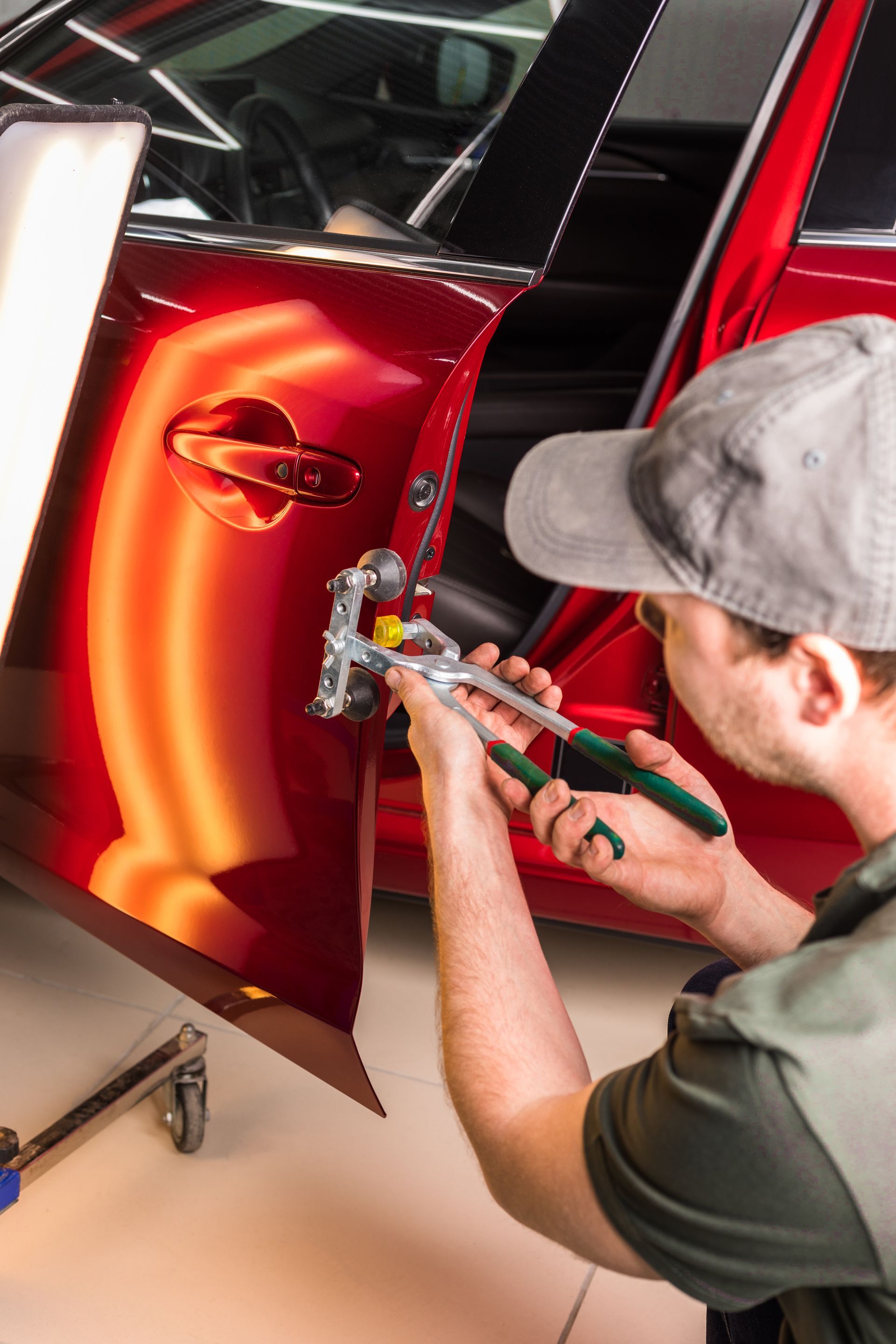
Not all hail damage can be fixed the same way. Paintless dent repair is the preferred method when the paint is intact. It preserves your factory finish and is often the more cost-effective route.
If the impact cracked or chipped the paint, that panel needs traditional bodywork instead. Body shop repairs cost more because they involve paint, blending, and additional labor. Some cars need a mix of both approaches.
We handle the paintless side and coordinate with body shop partners when a car needs both. Our paintless dent repair page has more context on the method itself.
Access and Disassembly
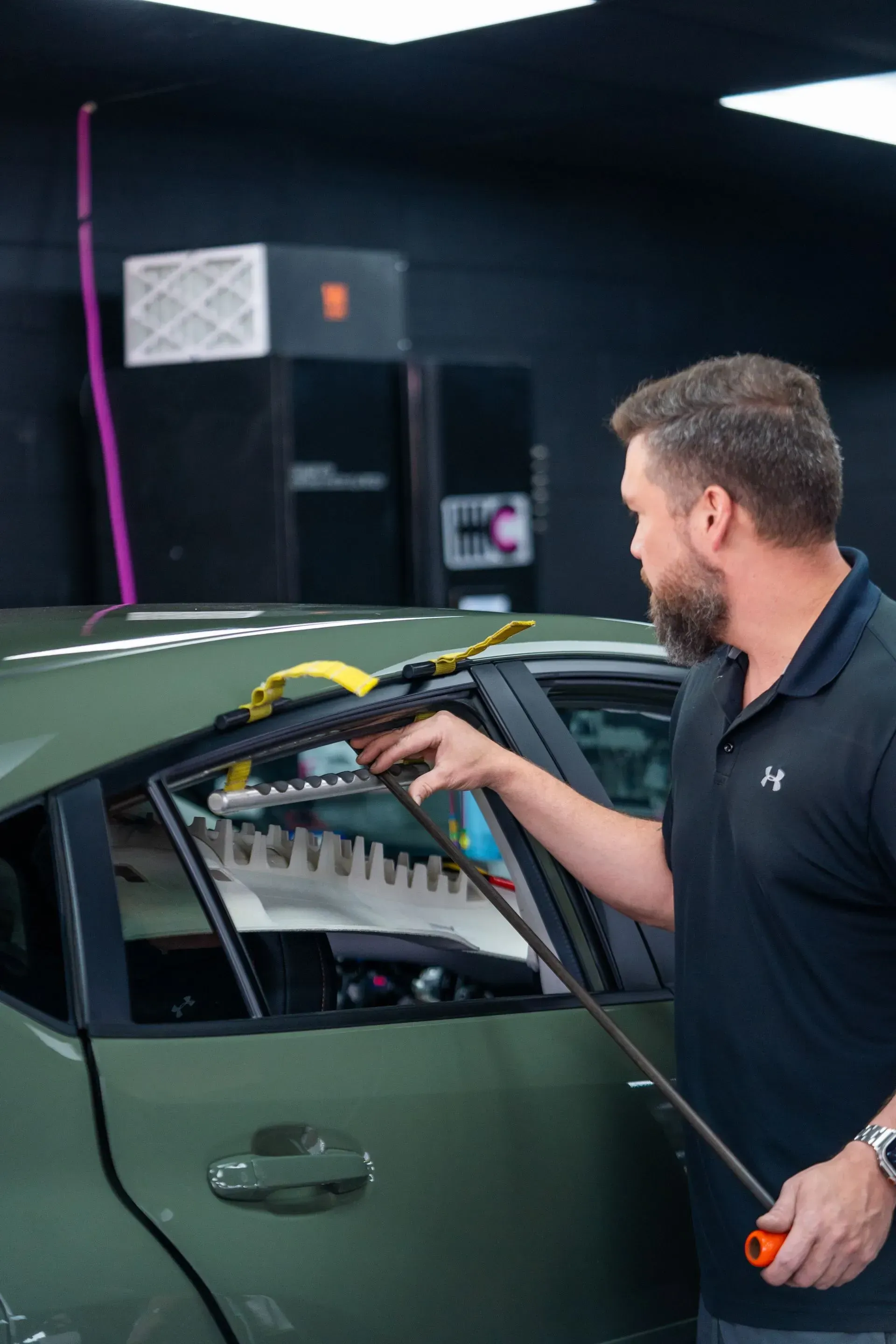
Some dents require the tech to remove interior panels, lights, or trim to reach the back of the metal. That labor adds to the total. On modern cars with a lot of electronics packed into the doors, disassembly time can be significant.
This is where phone or drive-by quotes fall apart. A shop that has not seen the car has no way to know what needs to come apart. Any real estimate has to happen with the car in front of us.
How Insurance Changes the Math
If you have full coverage that includes weather damage, the numbers on your estimate matter differently. Instead of paying the full repair, you pay your deductible, and the insurance side picks up the rest of the approved work.
The math looks something like this: total approved repair minus your deductible equals what insurance pays. Everything above the deductible is on them. Everything up to the deductible is on you.
Here is where the shop side matters. If the total repair estimate is high enough, we may cover your deductible depending on the situation. The specifics depend on how much damage the car has and the shop's ability to work the numbers. Worth asking about at the estimate stage rather than assuming.
You can read more about our approach on the hail repair insurance claim page.
When Paying Out of Pocket Makes Sense
For light damage, sometimes paying out of pocket is the smarter move. If the repair total is close to or below your deductible, filing a claim does not save you money. You end up paying about the same either way, minus the paperwork.
Situations where out-of-pocket often make sense:
- Light damage confined to a single panel
- The car is older, and you do not want a claim on the record
- Your deductible is high, and the damage is light
- You want to control which shop does the work without any network limitations
Situations where filing usually makes sense:
- Full-vehicle damage from a major storm
- Significant panel work needed
- Paint damage requiring body shop work in addition to dent repair
- Total damage clearly exceeds your deductible by a comfortable margin
Neither route is universally right. It depends on your specific situation, your policy, and what the damage looks like.
What to Expect From a Real Estimate
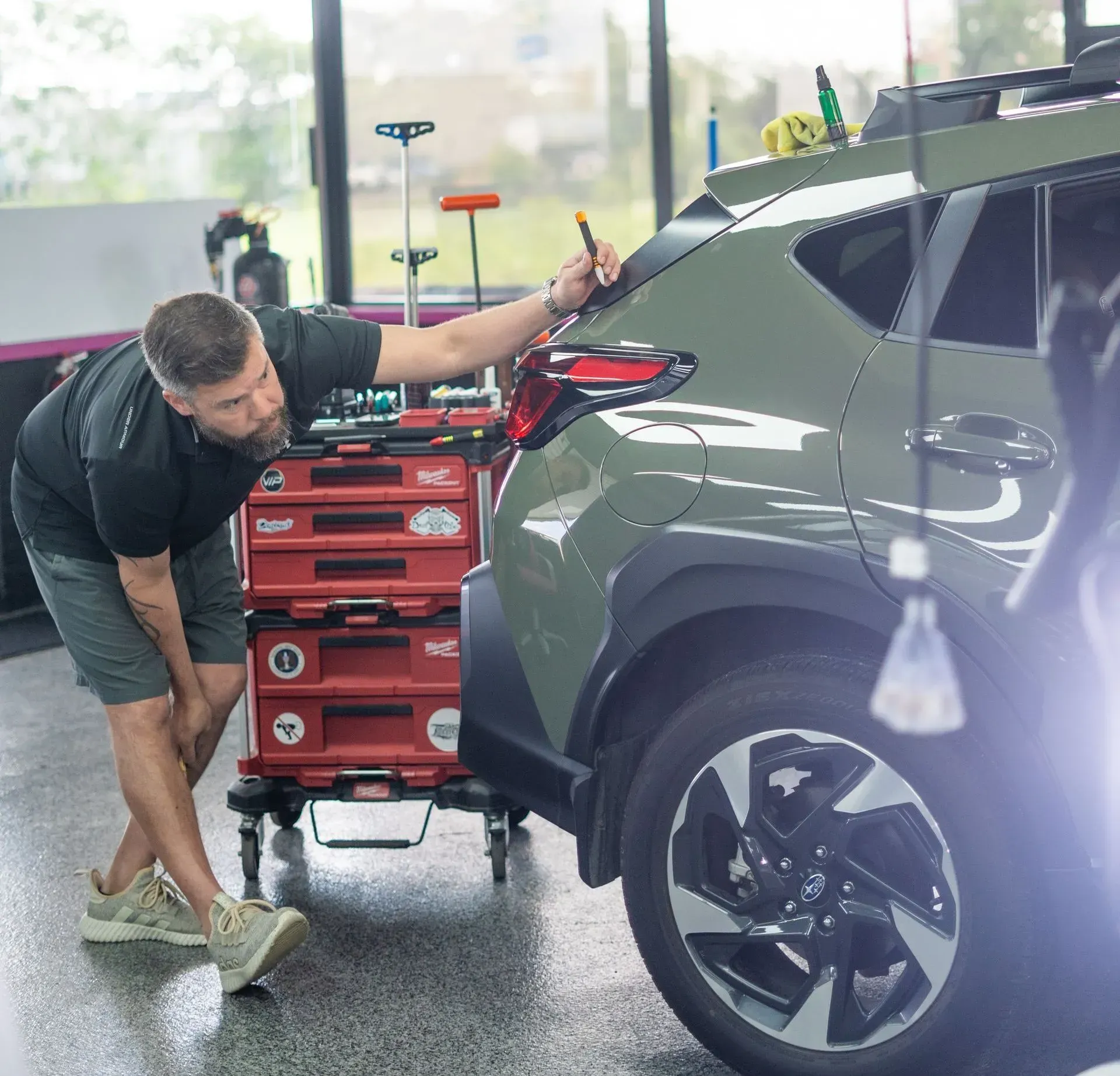
When you bring the car in for an estimate, here is what should happen. A tech walks the vehicle, marks each panel, and counts and grades dents by size. They check for any paint damage and look at access complications. The number gets written based on all of that together.
A real estimate takes time. Ten seconds and a wave-of-the-hand quote is not an estimate; it is a guess. If a shop is not looking closely at your car, you are not getting an accurate number.
We take our time with estimates because rushing means catching only what is obvious. What gets missed at the estimate stage causes trouble later when the actual work uncovers the rest. Better to be thorough at the start.
Come By and Let Us Walk You Through It
The only way to know what your hail damage repair cost looks like is to have the car looked at in person. We are happy to write an honest estimate and explain the numbers behind it. If insurance is involved, we help with that side of the paperwork too.
Reach out through our contact page, or browse the Harker Heights Ceramic Coatings site. Drivers around town can also see the Killeen paintless dent repair page for local context.
Frequently Asked Questions
Why can shops not give me a number over the phone?
Because hail damage varies too much to price sight unseen. A tech has to count and grade the dents, look at which panels are affected, and check for paint damage. Anyone giving a number without seeing the car is guessing or lowballing to get you in the door.
The right answer is an in-person walk. It does not take long and gives you a number you can actually plan around.
Will paying for repairs myself avoid an insurance rate hike?
Sometimes, though every policy is different. Weather-related claims like hail are often handled differently from at-fault claims, but the specifics vary by insurer and by your history.
Best to talk to your agent before you commit either way. This is not something we can answer for your specific policy, but it is worth a phone call before you decide.
What if the estimate turns out to be low once repair starts?
That is where supplements come in. If the actual work uncovers damage the estimate did not include, your shop files a supplement with insurance to update the number.
We take care of the supplement paperwork so you are not making calls in between the repair. Supplements are common on hail claims, and a good shop knows how to work them through.
Does the type of car change the cost?
Yes. Certain vehicles have more complex panel construction, more expensive parts, or paint that behaves differently under repair. Aluminum body panels, for example, take longer to work than steel.
Higher-end vehicles often cost more to repair simply because their materials and construction are more involved. That is factored into any real estimate.
How long is a hail estimate good for?
Most shops honor an estimate for a reasonable window, but the specifics vary. If you get an estimate and then wait months before deciding, the shop may need to walk the car again. Damage can shift slightly over time, and shop pricing can change.
Best to move on the estimate within a few weeks if you plan to proceed. Ask any shop upfront how long their number stays valid.