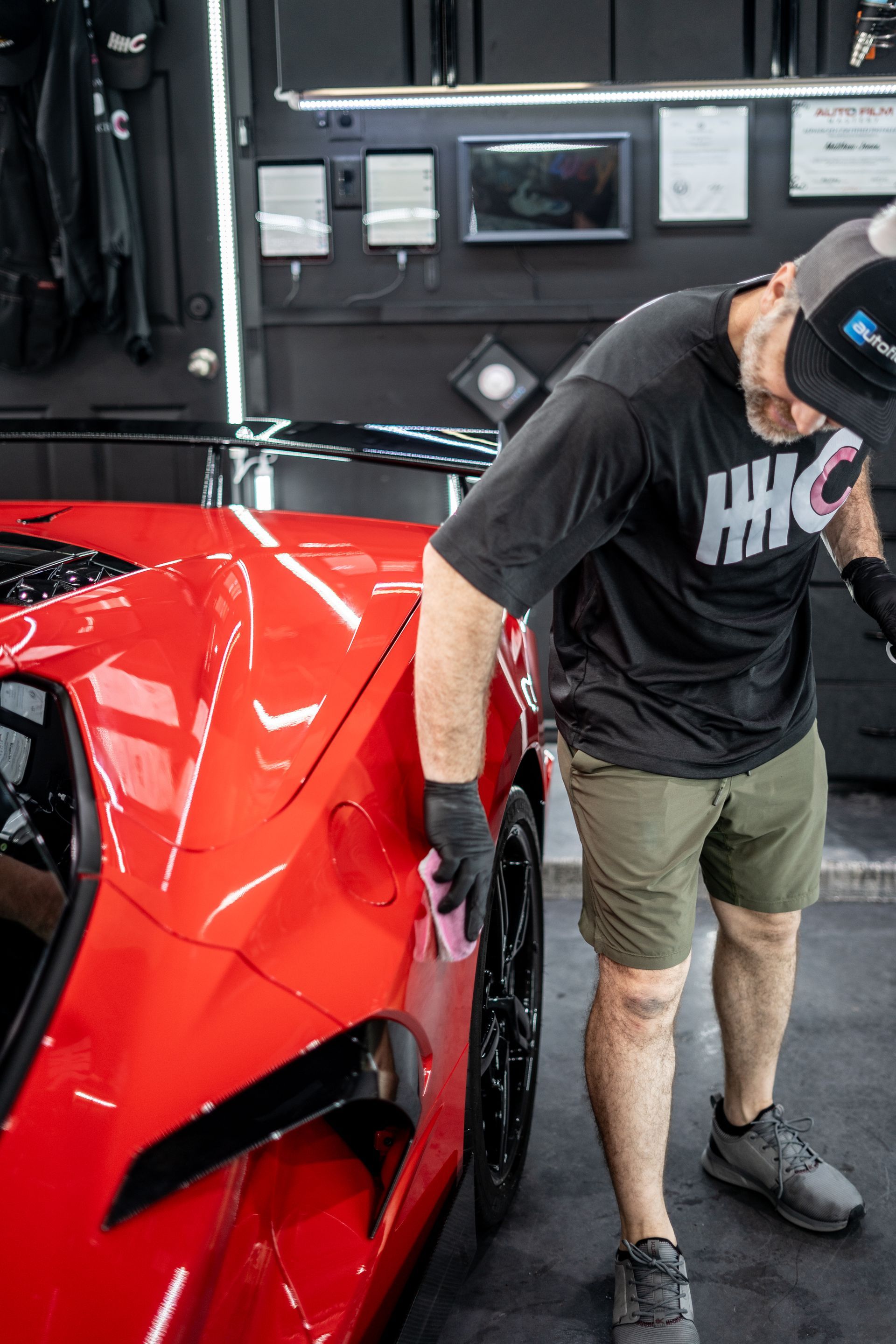
What Dents Can (and Cannot) Be Fixed With Paintless Dent Repair
Someone dinged your door in a parking lot. A hailstorm rolled through. A shopping cart got loose. Or maybe you backed into something you swore you saw a second earlier.
Now you are looking at a dent and wondering if paintless dent repair can handle it, or if you need something more involved. Fair question. And the answer is that what dents can be fixed with paintless dent repair depends on a few real factors, not just marketing claims.
We do paintless dent repair every day around here. What we will not do is oversell it.
There are dents the method handles beautifully, and there are dents it was never designed for. Knowing the difference before you drive across town matters. This article walks through the honest picture of what fits and what does not.
The Short Version
Paintless dent repair suits dents where the paint stayed intact and the metal has not been stretched past what it can bounce back from. It does not work on damage where the paint has cracked, chipped, or been torn open by impact.
Everything else lands somewhere in the middle, and that middle is where the shop side experience matters. A good tech reads the dent and can tell pretty quickly whether it is a candidate.
Dents That Are Great Candidates
Most everyday dents fit the paintless method well. Here is what typically works:
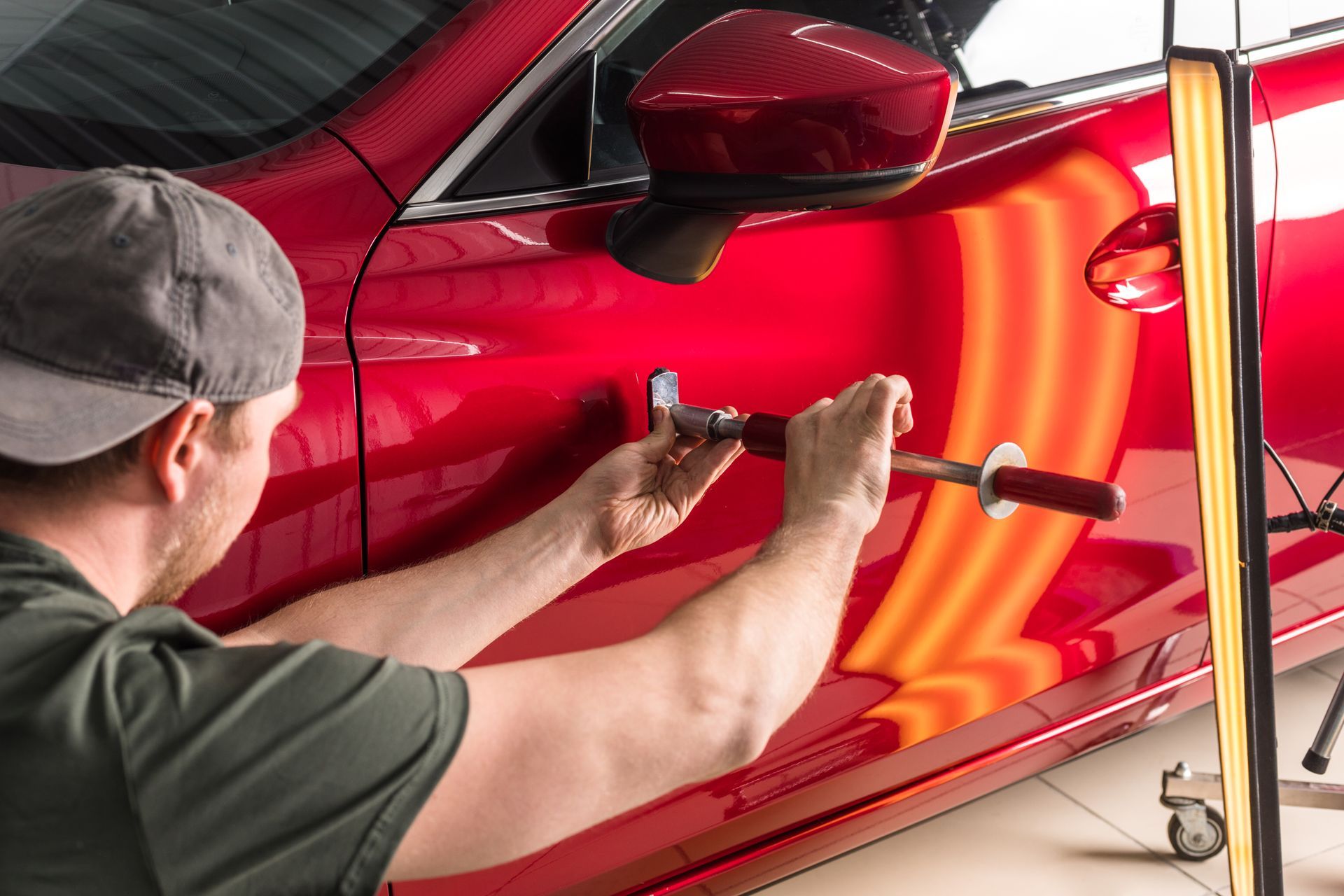
- Door dings from shopping carts, other car doors, or bike handlebars. Small, shallow, paint intact. Almost always a good fit.
- Hail damage where the paint is unbroken. Even hundreds of dents on the same car, as long as the impact did not crack the finish.
- Body panel dents from light impacts. A bumped fender in a parking lot or a hit from a low-speed backing incident often works.
- Creases from moderate impacts, if the paint held. Longer dents that follow a body line can still be candidates depending on depth.
- Roof and hood dents from small falling objects. Branches, sports equipment, tools that fell during work.
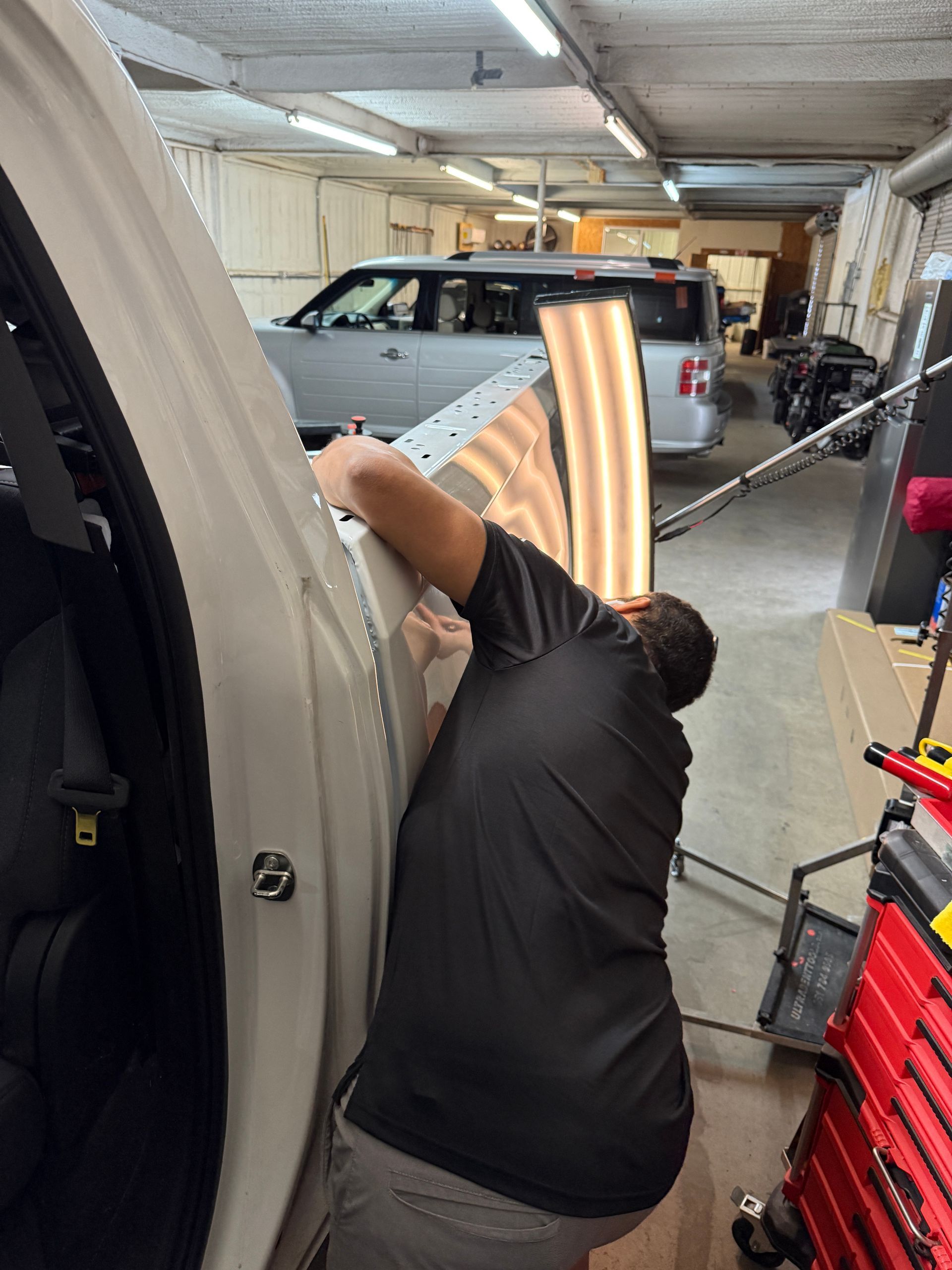
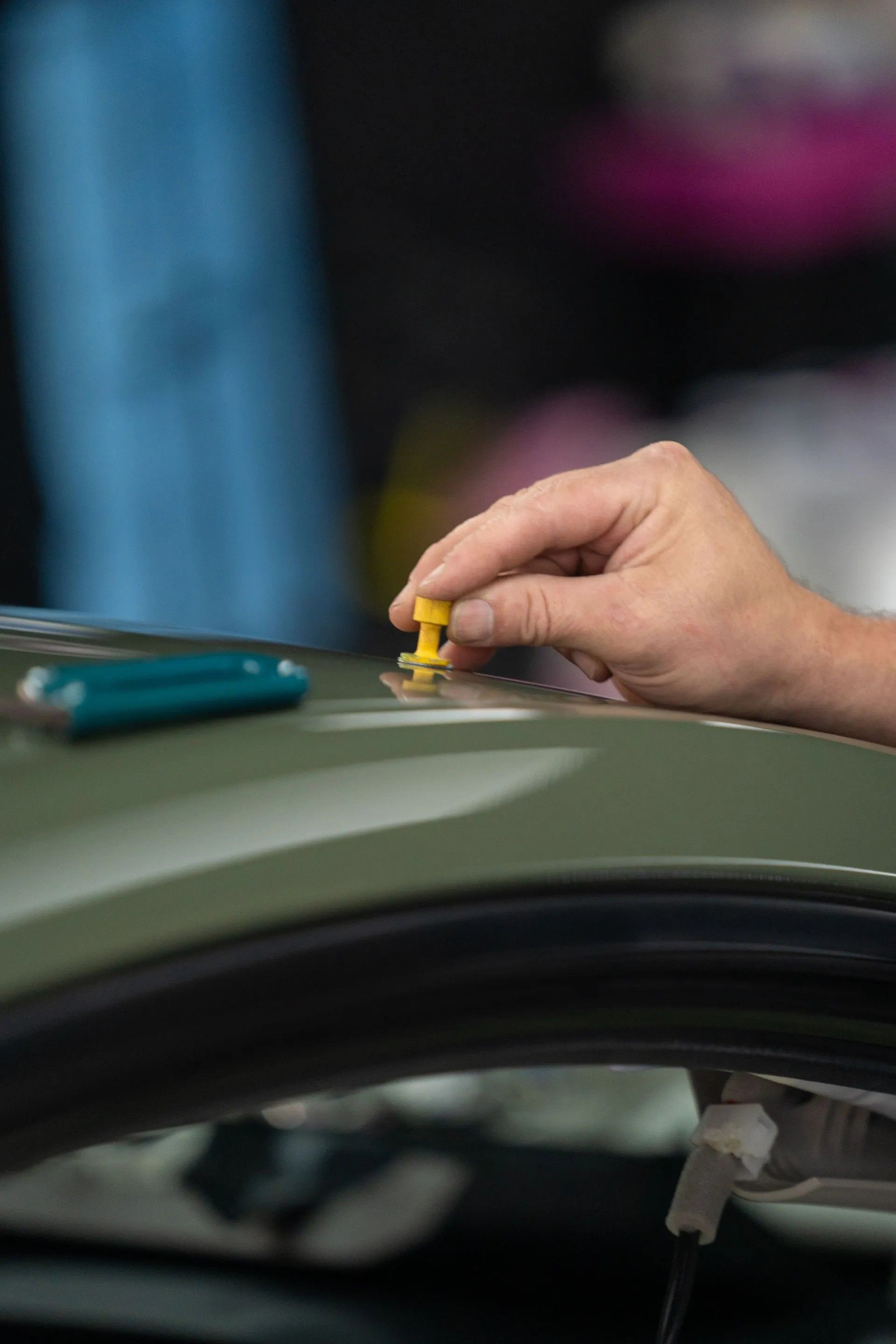
For hail specifically, we handle a lot of full-vehicle repairs where the paint stayed intact. That volume of work builds up a pretty good read on what fits and what does not. You can see more on our paintless dent repair page.
Dents That Do Not Fit the Method
Here is the part most content on this topic skips. Some damage is outside what paintless can handle. Being straight about it saves you time, money, and frustration.
Cracked or Chipped Paint
The moment paint is broken, paintless dent repair is off the table for that panel. The method preserves the factory finish. If the finish is already damaged, the panel needs traditional bodywork with paint, blending, and refinishing.
You can usually tell by running a fingernail lightly over the dent. If you feel a break in the surface, that is a paint crack. If it is smooth, the paint likely held.
Deep Impacts That Stretched the Metal
Some dents pushed hard enough that the metal itself stretched past what will spring back. When metal stretches, it holds a memory of the impact. Even the best tech will not restore that panel to factory shape without a low spot showing up.
Techs check for this by feel. If the metal has stretched, we say so upfront rather than trying to force the method and deliver a mediocre result.
Damage on Body Panels With No Back Access
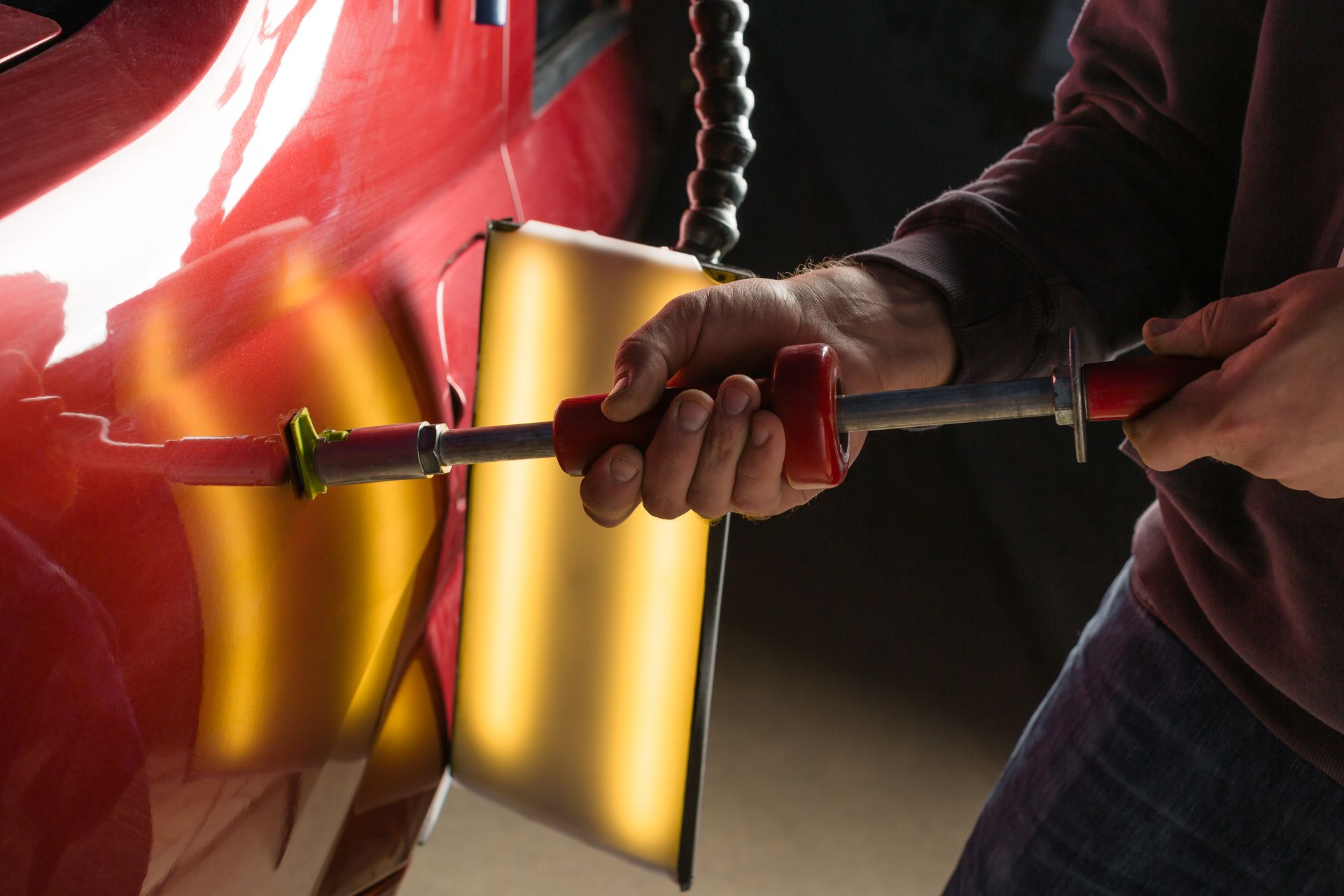
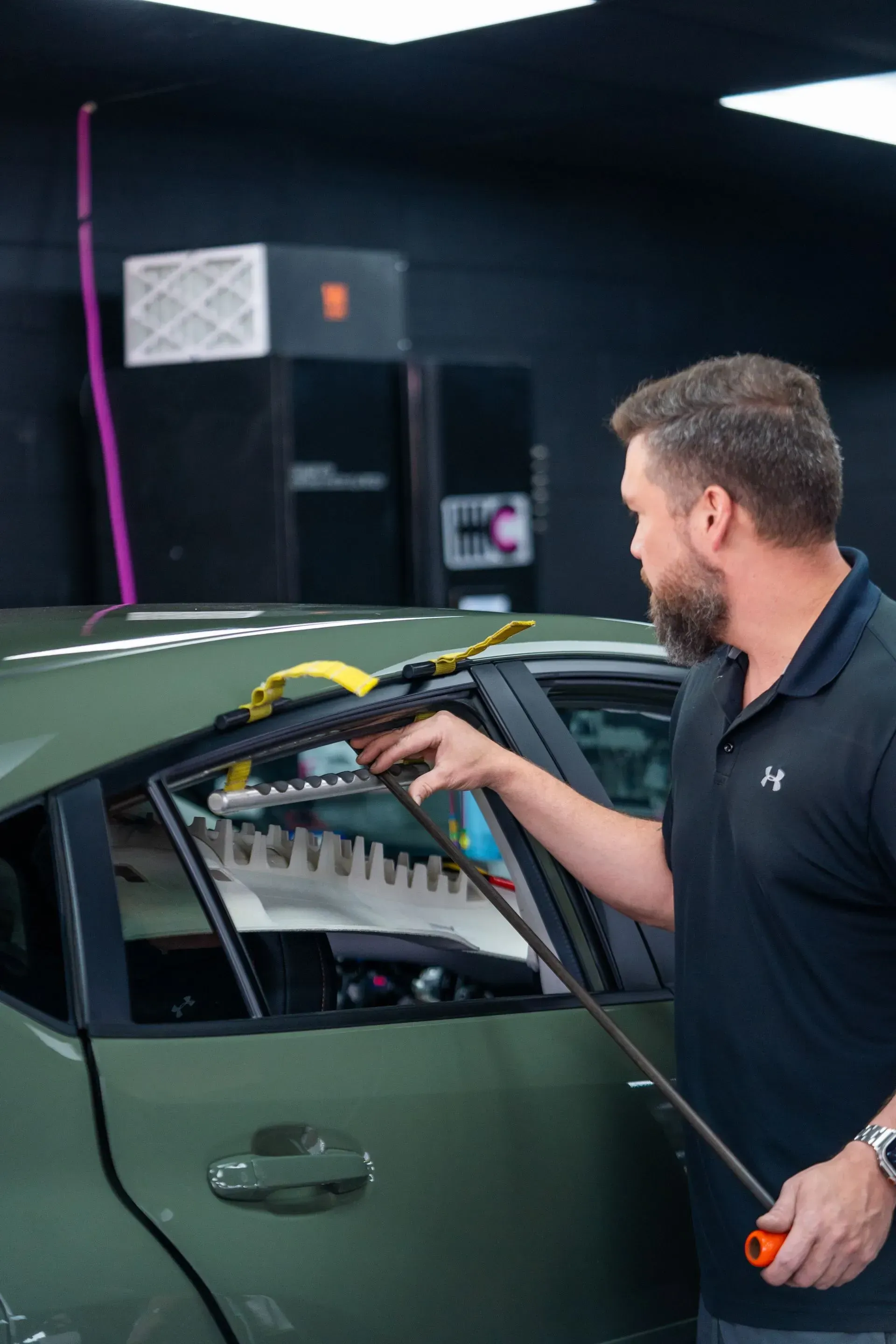
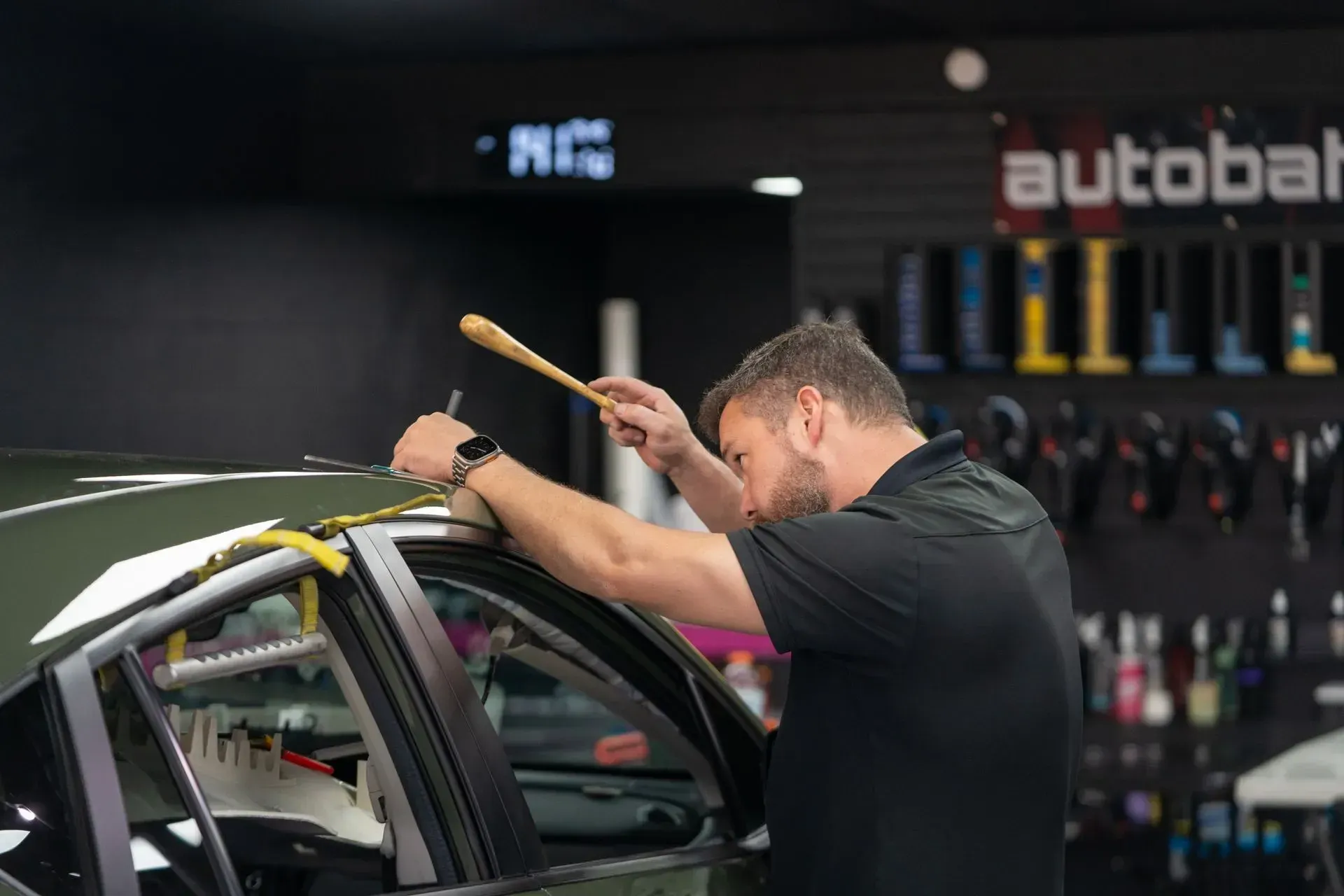
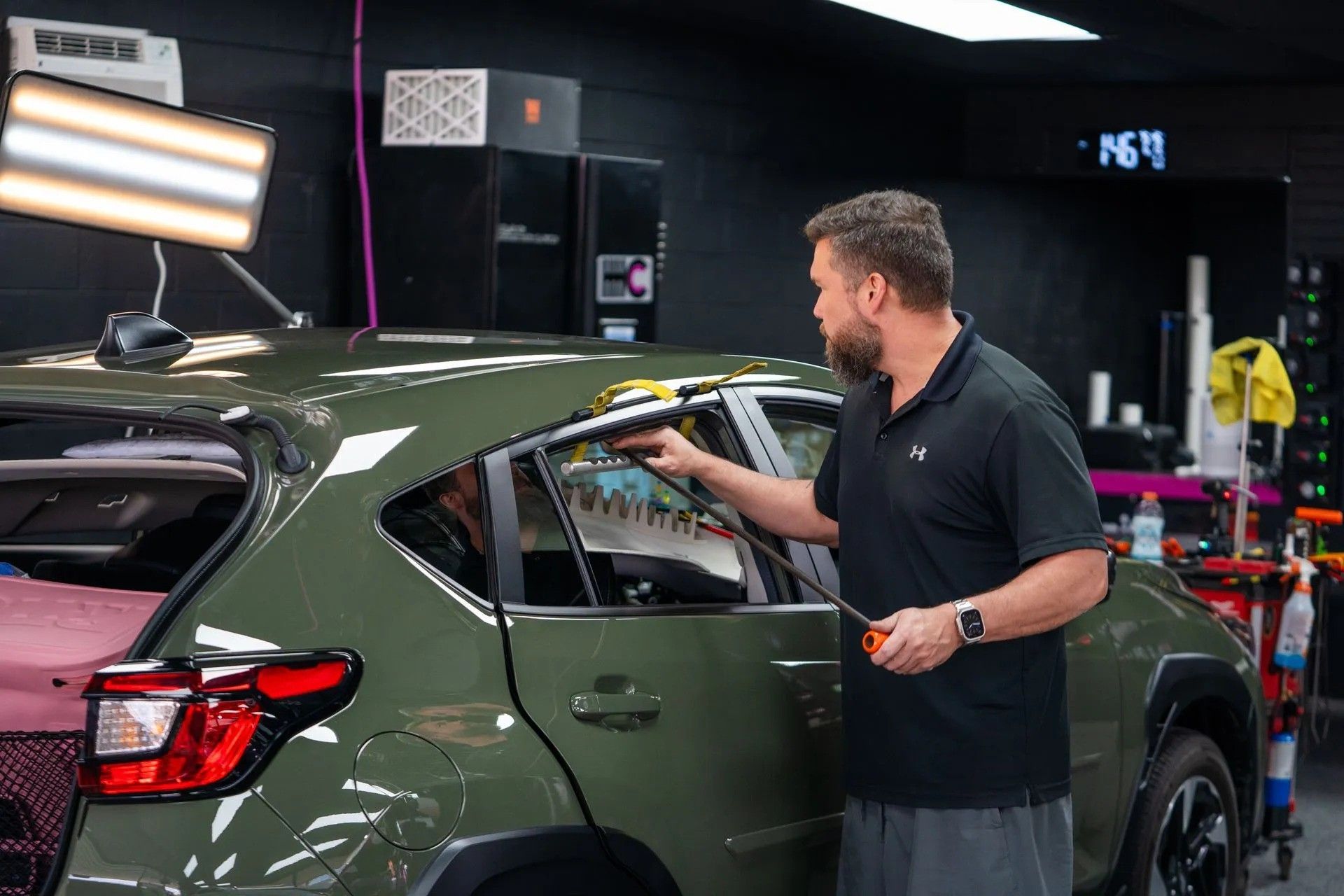
The paintless method works by pushing the metal from behind the panel. If the tech has no access to the back, the dent may still get worked but through more limited techniques that do not always deliver the same result.
Modern cars pack a lot of electronics, wiring, and structural components into places that used to be open. Some dents that would have been easy fixes twenty years ago are trickier now.
Sharp Creases From Hard Impacts
A crease is a line dent, and while some creases are candidates, sharp creases from harder impacts often need bodywork. The metal along the crease line is often stretched, and the paint has often cracked at the sharpest point of the bend.
We look at each crease case by case. Some fit paintless. Some do not.
Damage Near or On Body Lines and Edges
Body lines and panel edges present technical challenges for the method. It is not that they are always outside paintless, but they take more skill and take longer. Some fit the method, and some need bodywork.
What We Do When Paintless Is Not the Answer
When we look at a car and see damage that is outside what paintless will handle, we do not just send you off with no path forward. We work with body shop partners for those cases. The vehicle can go through traditional bodywork for the panels that need it, and paintless for the panels that fit.
For mixed damage cars, this combined approach is often the best result. We handle the paintless side, our partner handles the paint and refinishing side, and you end up with a proper repair across the whole car.
How to Tell Before You Drive to a Shop
Before you head anywhere, do a quick self-assessment:
- Check for paint damage. Look at the dent under good light. Any color changes, cracks, or chips? If yes, plan for bodywork on that panel.
- Feel the surface. Run your fingertip lightly over the dent. A smooth surface usually means paint is intact. A rough or broken feel usually means paint damage.
- Look at the dent depth. A shallow dish-shaped dent is usually a candidate. A deep sharp crease is more likely to need bodywork.
- Consider the location. Dents on flat, open panels are easier candidates than dents right on a body line or edge.
- Take pictures. Good photos from a few angles help before an in-person walk. We can give you a rough read from photos, though the final call is in person.
None of this tells you the definitive answer. That comes from the walk. But it helps you go in with a realistic sense of what to expect.
Why Some Shops Oversell Paintless Dent Repair
You may run across shops that will take on almost any dent as a paintless job. Some of those work out. Some do not. When the method is stretched past what it should be handling, the result is often a dent that is smaller than before but still visible, or a low spot that shows up in certain light.
We would rather tell you upfront that a certain panel needs bodywork than take your money and hand you a car that is not right. That is not because we are turning away work. It is because we care about the finished result more than the invoice.
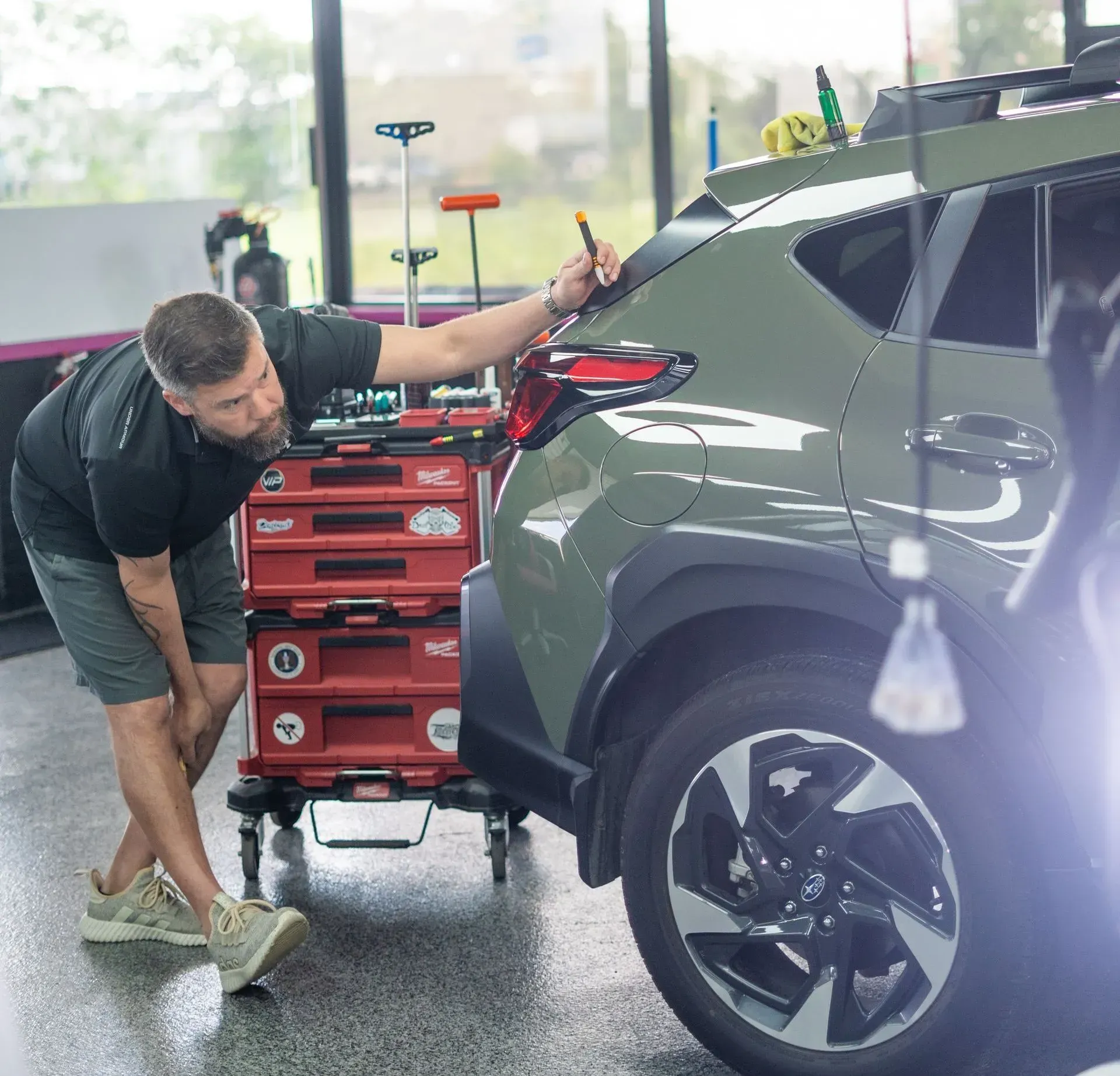
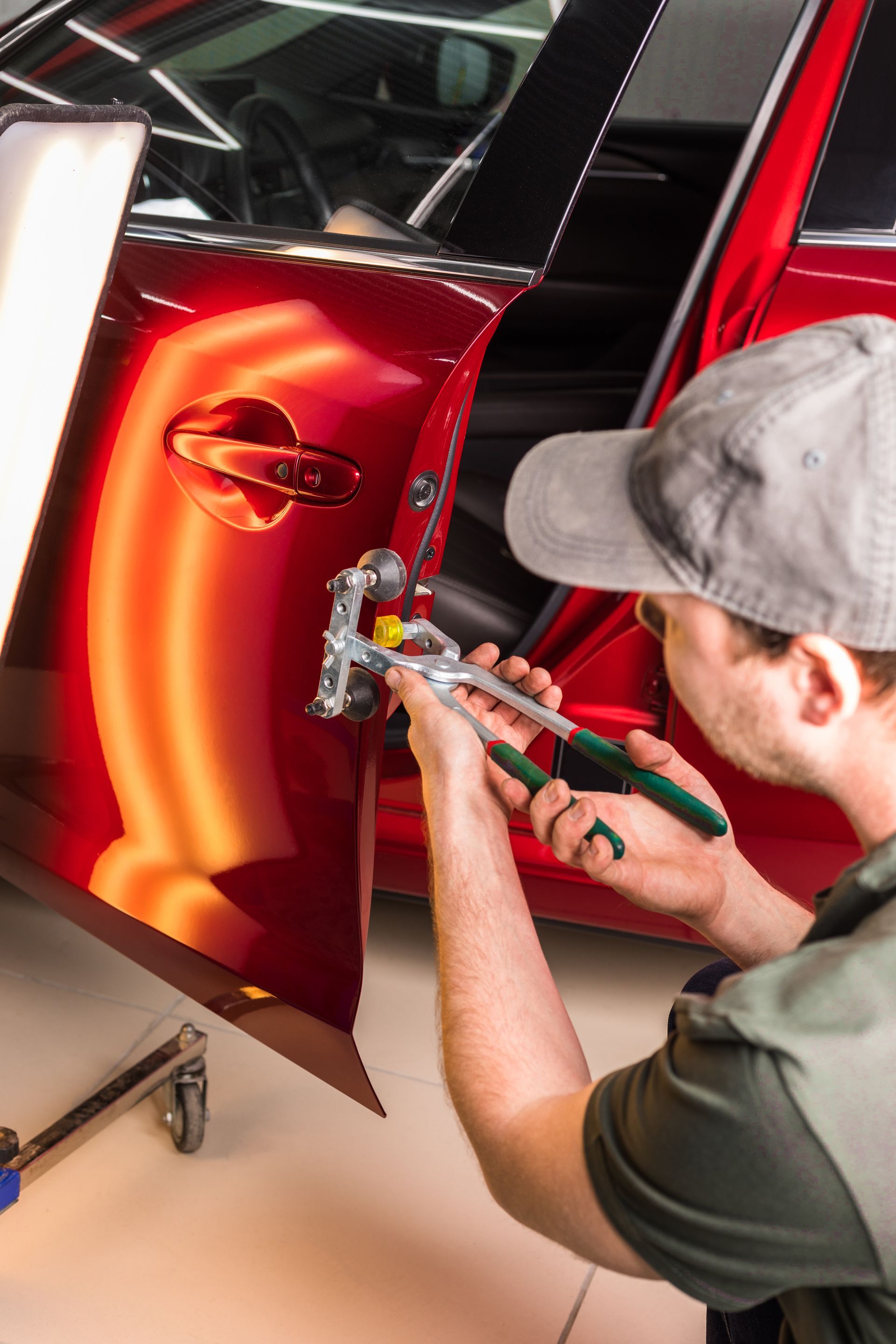
Bring the Car By and We Can Give You the Real Read
The only real way to know whether your damage is a paintless candidate is to have a tech look at the car. It takes a short in-person walk and gives you a clear answer.
Reach us through the contact page, or check the main Harker Heights Ceramic Coatings page. Local drivers can visit the Killeen paintless dent repair or Harker Heights paintless dent repair pages.
Frequently Asked Questions
How big of a dent can paintless dent repair handle?
Size alone is not the deciding factor. Depth and paint condition matter more.
We have handled dents the size of a dinner plate that were candidates because they were shallow and the paint held. We have also seen small dents that had to go to bodywork because the paint cracked at the impact point. Come see the car and we can give you an honest read.
Will paintless dent repair leave any evidence the dent was there?
When the method fits the damage well, the finished result is usually indistinguishable from an undamaged panel. That is the whole point of the method. When paintless is stretched to handle damage outside its range, the result may still show a slight low spot or shadow. This is why the honest fit assessment matters so much.
Can hail damage always be fixed with paintless dent repair?
Most hail damage where the paint stayed intact is a good candidate. Full-vehicle hail with hundreds of dents is common territory for the method when the finish held. If the impact was hard enough that clear coat cracked on some panels, those specific panels need traditional bodywork while the rest go through paintless.
What if my dent is on an aluminum panel?
Aluminum body panels are workable, but they behave differently from steel. Aluminum has different flex properties and takes more time and skill to work correctly. If your car has aluminum panels, stop by and we can walk the damage together and give you our read on it.
Should I just try to pop the dent out myself?
Not a good idea for most people. Home methods like plunger pulls, boiling water, or dry ice can occasionally push a dent close to flat, but they rarely deliver a clean finished result. Worse, they can crack paint or leave the metal in a state that makes professional repair harder later. If the dent matters, get it looked at properly.